1. Information about cataract
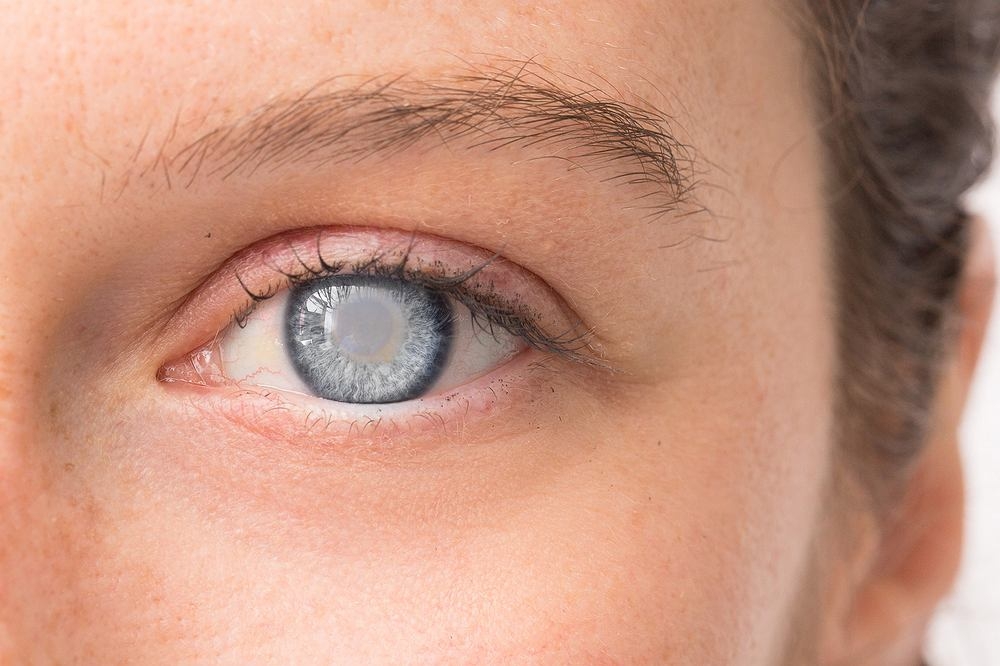
Cataracts are a common disease and mean age-related clouding of the lens of your eye, which is normally clear. The lens of our eye is located behind the pupil and changes color when it is very cloudy, which can be seen from an ordinary view without a microscope. At this time, the pupil's color is like pearl. For this reason, cataracts are popularly called pearl water.
There is no need to be afraid of the diagnosis of cataract. Because if it is examined in time and operated by a professional surgeon, vision is restored.
Cataracts are more common in people over 60 years of age. In addition, there are cataract that occur after birth and after trauma. But the most common are age-related cataract.
In patients with diabet cataract manifest at a younger age.
2. What are the symptoms?
When cataract occur, the patient's vision is impaired. The disease is progressive and blurred vision increases. the patient looks as if through a blurred window. In such patients, even sensitivity to light increases. The fact that people who wear glasses to see the near distance ones begin to see the near distance ones without glasses is also a sign of central cataract. Such patients can closely perform even the most delicate household chores (injection, etc.). What does it mean? How can this be?
Every healthy patient should use glasses to see clearly after the age of 40 for near distance with healthy eyes. This is normal. If it is not used, then this eye has either congenital myopia - nearsightedness (they do not see far, but they see very well and do not need glasses), or they have cataract! This is because during cataracts, as the lens matures, it creates false myopia in the eye, and they can see better. This is a sign of cataract.
3. How it is treated?
There is no drug treatment for cataract today. The only treatment is surgery. The newest and safest of the surgical techniques is the Phacoemulsification method, abbreviated as FAKO. A 2 mm incision is made by ultrasonically penetrating the eye, and the turbid crystal is broken up, absorbed, and expelled by ultrasonic waves. An artificial lens is placed in place of the removed crystal.
Lenses placed inside the eye are lifelong. Before surgery, different types of lenses are offered to the patient (monofocal, bifocal, trifocal - smart lenses) and patients choose them themselves. The choice of lenses is up to the patients before the operation. Through them, patients look at a completely transparent world again.
4. What percentage of vision will have patient after cataract surgery?
Unlike patients with glaucoma, patients with cataract return to vision after surgery if they are operated on in a timely manner. Sometimes the lens overgrows, swells and affects the bonds of the capsule, where it is already located, and weakens them. This is considered a delay case, and in this case the course of the operation may change. In case of delayed operations, the power of the ultrasound is not enough, the risk of complications increases. Postoperative vision also depends on the presence of other eye diseases. If there is no other disease in the eye, vision is restored to 100%. Because the cloudy lens is located in the front before the operation, the fundus is either visible or not visible at all. As the cloudy lens is removed after the operation, the fundus is already examined. If there is any disease in the fundus (for example, diabetes), then the fundus is already being treated.
5. Is there pain during the operation? What anesthesia is used??
The operation is performed under local anesthesia - by instilling eye drops. The operation is painless. In rare cases, patients become sensitive, react to a simple touch, move their eyes and head from right to left. In this situation, there are difficulties to operate. In such cases, general anesthesia is needed.
Dear patients! If you feel a slight decrease in vision, get tested in time! Let's not forget that we can restore vision in very early ways only in the early stages of eye diseases.